


Sheetala Ashtami 2026: Puja, Significance & Traditions and Why It Is Celebrated.
The festival is especially celebrated in North Indian states like Rajasthan, Uttar Pradesh, Gujarat, Haryana, Delhi and Bihar, deeply rooted in spiritual belief as well as ancient practices of cleansing, health and hygiene.
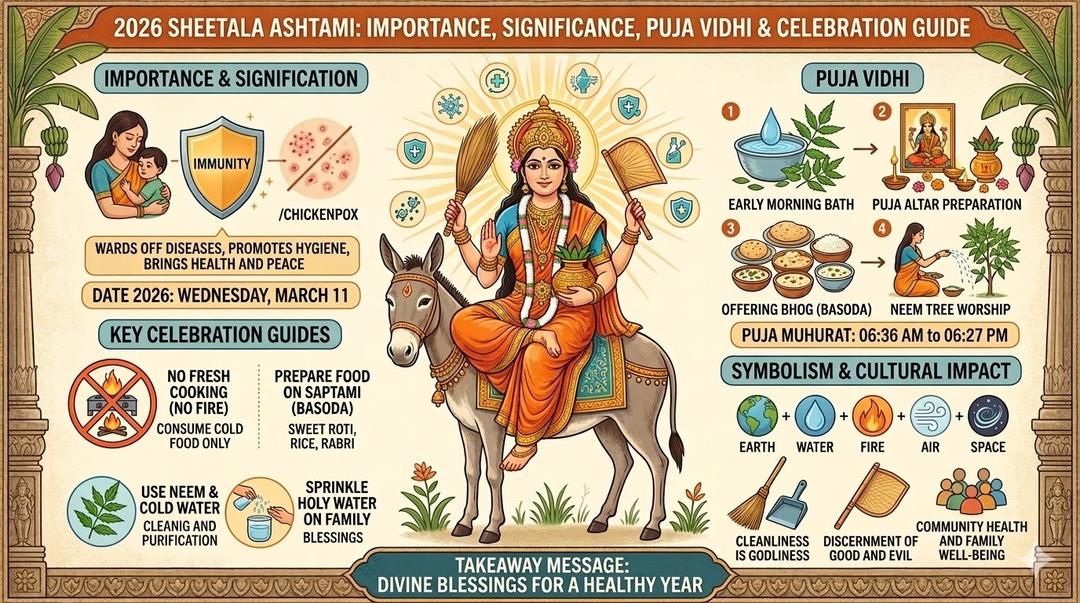
Sheetala Ashtami — also known as Basoda — is a sacred Hindu observance dedicated to Goddess Sheetala, the divine healer and protector against contagious and seasonal diseases. In 2026, this festival falls on Wednesday, March 11, 2026, on the Chaitra Krishna Paksha Ashtami (eighth lunar day of the waning moon).
What is Sheetala Ashtami?
Sheetala Ashtami (also called Basoda Puja in some regions) is a festival to honour Goddess Sheetala, who is revered as the divine mother who alleviates diseases and protects her devotees from epidemics like chickenpox, smallpox and other infectious ailments. She is traditionally depicted holding neem leaves, a broom and a pot of cool, healing water — symbols of purification, healing and relief from fevers.
Celebrated on the Ashtami tithi of Krishna Paksha in Chaitra, it generally occurs about eight days after Holi each year in the Hindu lunar calendar.
Date & Timings
| Event | Date |
|---|
| Sheetala Saptami | Tuesday, March 10, 2026 |
| Sheetala Ashtami | Wednesday, March 11, 2026 |
| Ashtami Tithi Begins | March 11, 1:54 AM |
| Ashtami Tithi Ends | March 12, 4:19 AM |
| Auspicious Puja Muhurat | Morning to early evening (varies by region) |
Importance & Spiritual Significance
- Divine Protector from Diseases
- Cultural and Health Practices
- Environmental Cleansing
- Community and Devotion
Puja Vidhi
Before the Festival
- Clean the home and kitchen thoroughly
- Prepare all food items the previous day
On Sheetala Ashtami
- Wake up before sunrise and take a holy bath in cold water to purify the body.
- Place turmeric (haldi), neem leaves, flowers, rice, fruits, milk and jaggery around the altar(Puja ki vedi).
- Light a diya or ghee lamp in front of the Goddess Sheetla idol.
- Ensure all offerings (bhog/prasad) are taken from the food prepared the previous day.
Today, many communities also organise health awareness drives, cleanliness campaigns and discussions on seasonal disease prevention during this festival. Such activities blend spiritual practice with community welfare and public health education.
Tags: